
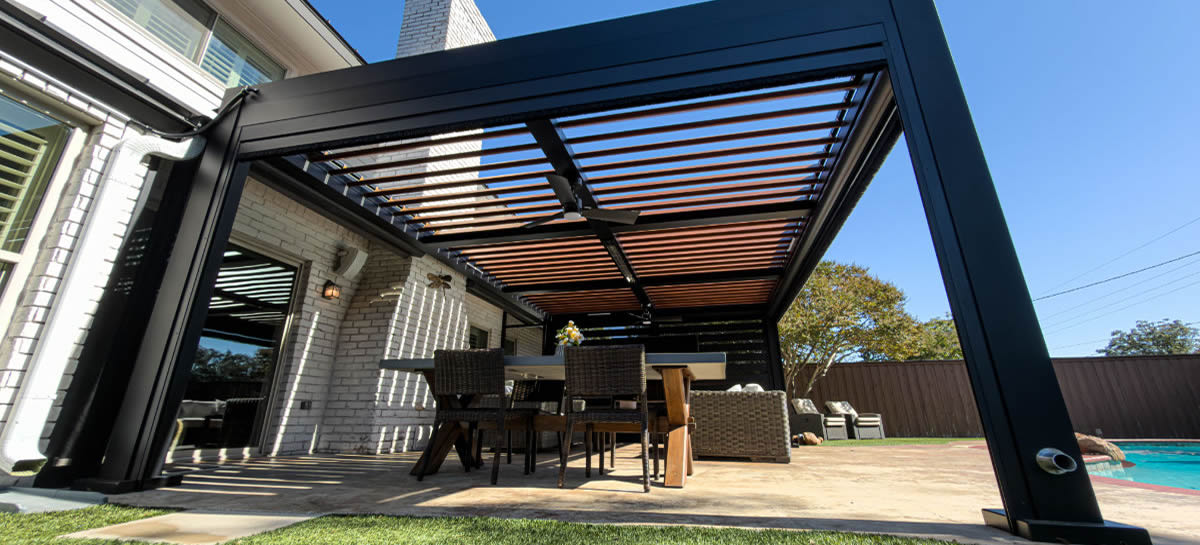
Fall is the best time of year to build in North Texas. The heat breaks, the weather is predictable, and a new cover is ready for spring. If you’re planning to shade your patio, you’ll likely end up choosing between a traditional patio cover and a louvered pergola (also called a louvered roof or adjustable pergola).
Both add shade and value. They work very differently, though. This guide compares them side by side for homeowners in Dallas, Fort Worth, Frisco, Plano, Southlake, and the rest of the Metroplex.
What Is a Louvered Pergola?
A louvered pergola is an aluminum structure with a roof made of rotating blades, or louvers. With the push of a button, the louvers open to let in sun and breeze or close to form a watertight roof.
The Azenco R-BLADE, one of the systems KJ Custom installs, is a good example. Its key specs, from Azenco:
-
Motorized aluminum louvers that rotate up to 90 degrees
-
Gapless seal when closed, with a hidden gutter system that drains rainwater through the posts
-
Engineered for wind loads up to 190 mph and snow loads up to 100 lbs per square foot
-
Single zones up to 22’10” x 16′, with multiple zones joined for larger patios
-
Miami-Dade NOA approval, one of the strictest wind standards in the country
-
Rain sensors that close the roof automatically when it starts to rain
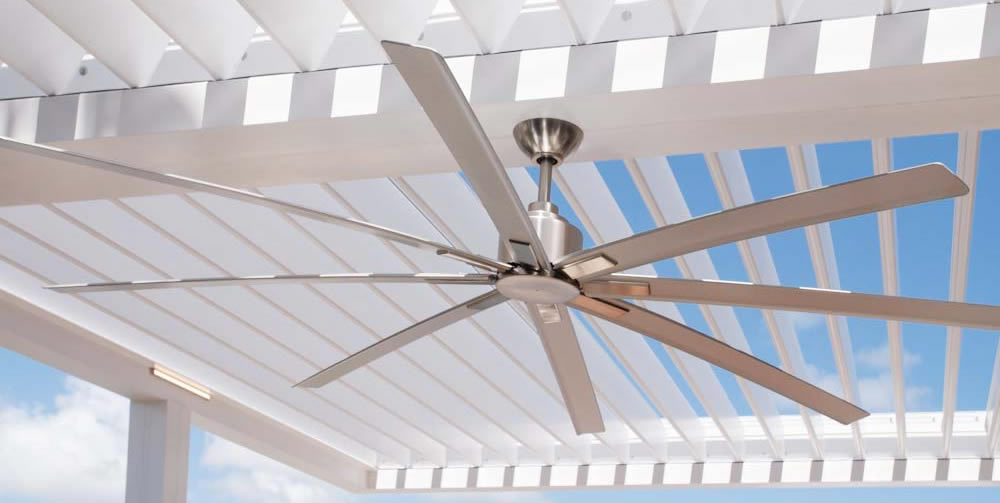
R-BLADE systems can also be fitted with motorized screens, fans, heaters, LED lights, and speakers. They can be controlled through Alexa, Google Home, or Control4.
What Is a Traditional Patio Cover?
A traditional patio cover is a fixed, solid roof over your patio. It’s typically built from wood, aluminum, or framing that matches your home’s roofline and shingles. It provides permanent shade and rain protection but can’t be opened to let in sun.
An attached cover that ties into your roof can look like an original part of the house. On the downside, it can darken nearby rooms and trap heat underneath on still summer days.
Side-by-Side Comparison
| Feature | Louvered Pergola | Traditional Patio Cover |
|---|---|---|
| Adjustable sun and shade | Yes, louvers rotate open or closed | No, always shaded |
| Rain protection | Yes, when closed (with built-in gutters) | Yes, always |
| Ventilation and heat release | Excellent, open louvers vent hot air | Limited, heat can collect under the roof |
| Natural light into the house | Yes, when open | Can darken adjacent rooms |
| Materials and maintenance | Powder-coated aluminum, low maintenance | Wood needs sealing or paint; shingles need upkeep |
| Smart features | Rain sensors, lights, heaters, app and voice control | Fans and lights |
| Typical cost | Higher upfront | Lower upfront (varies widely) |
| Best for | Homeowners who want sun in winter and shade in summer | Homeowners who want permanent shade at the lowest cost |
Why Louvered Roofs Make Sense in North Texas
DFW weather changes quickly. A sunny afternoon can turn into a thunderstorm in 20 minutes, and a 95-degree September day can be followed by a 45-degree morning in November. A louvered roof adapts to all of it:
-
Summer: Close the louvers for full shade, or angle them to block the sun and still let hot air escape.
-
Storms: Rain sensors close the roof automatically, and the hidden gutters carry water away.
-
Fall and winter: Open the louvers to let in warm sunlight on cool days, without darkening your living room.
-
Spring: Open the louvers on mild days and close them during pop-up showers.
When a Traditional Patio Cover Is the Better Choice
A solid patio cover can be the right answer when:
-
Your top priority is permanent shade at the lowest upfront cost
-
You want the cover to match your home’s roofline and shingles exactly
-
Your HOA requires a roof that matches the main house
We build both, so we’ll recommend whichever fits your home, budget, and HOA rules.
Louvered Pergola Cost and Patio Cover Cost
Price depends on size, the number of zones, accessories, and site conditions. Louvered pergolas cost more upfront than most basic patio covers because they’re engineered aluminum systems with motors, sensors, and drainage built in. Many homeowners find the added flexibility worth it because the space works in every season.
Accessories such as LED lighting, heaters, and motorized retractable screens add to the total. They also turn a pergola into a true outdoor room. For screen pricing, see our 2026 motorized screen cost guide.
Do You Need a Permit in Dallas?
Usually. According to the City of Dallas, a one-story detached patio cover under 200 square feet on a single-family or duplex lot doesn’t need a building permit, as long as it’s outside the front and side yard setbacks. A roof attached to the house, or any deck with a roof, requires a Residential Alteration Addition Permit. Electrical work for lights, fans, or motors needs its own permit. Historic and conservation districts have additional requirements.
Frisco, Plano, McKinney, Fort Worth, and other cities have their own rules, and HOAs may require approval. KJ Custom handles the permitting process for you.
Louvered Roofs and Patio Covers Across DFW
Get a Design for Your Patio
We’ll measure your patio, review your HOA and city requirements, and show you louvered pergola and patio cover options side by side.
Call (972) 670-3670 or (888) 839-2453, or schedule a free in-home consultation.
Frequently Asked Questions
What is the difference between a pergola and a patio cover?
A traditional pergola has an open slatted roof that gives partial shade. A patio cover has a solid roof that blocks sun and rain. A louvered pergola combines both, with rotating louvers that open for sun and close into a watertight roof.
Are louvered pergolas waterproof?
Quality louvered systems are watertight when closed. The Azenco R-BLADE closes with a gapless seal and uses a hidden gutter system to carry rainwater through the posts. Rain sensors can close the louvers automatically.
Can a louvered pergola handle Texas storms?
Engineered systems are built for severe weather. Azenco rates the R-BLADE for wind loads up to 190 mph, and it carries Miami-Dade NOA approval. Wind sensors can also open the louvers to reduce wind load.
Is a louvered pergola worth the cost?
For many DFW homeowners, yes, because it works in every season. You get full shade and rain protection in summer and sunlight on cool fall and winter days, and the aluminum construction needs little maintenance.
Do I need a permit for a patio cover in Dallas?
Most attached patio covers do. In Dallas, a detached one-story patio cover under 200 square feet that is outside the front and side setbacks doesn’t need a building permit. A roof attached to the house requires a Residential Alteration Addition Permit, and electrical work needs a separate permit.


